

WE NEED SLOWER ART
Against the culture of creative speed

featuring interviews with artists from a range of disciplines.
The creative directors have left the building. They have all been fired and outsourced with pixels. Not literally, of course. But if you look around in mainstream world at the quality of art direction, it’s clear we have a big problem. And I’m not looking at the creators for this.
The other day as I was trying to decompress and watch The OC, I was violated by Hotel Trivago’s uncanny valley ai advert. I thought to myself…
Number 1. Who on earth is buying that these are real humans? & Number 2. Not only are they extremely annoying, but which creative director signed this off?
Then it came to me there probably wasn't one. It was most likely outsourced to someone who hadn't spent enough time with the work to care.
It is sad that this ultra-polished version has been officially chosen over and over to the point that mainstream creative direction is painful to watch. Art is everywhere, but it is NOT in the adverts we are seeing today, and it’s so painful because they are really everywhere.
This is a direct result of prioritising pace over quality.
Great art comes from time spent with an idea. Giving it an abundance of space to grow and evolve. The longer you have with it, the more considered it becomes and this quality of attention is directly translated into the work.
Each tiny thoughtful detail that has been curated with intention transmutes to the viewer of the creation. The process behind what you are seeing is felt. Unfortunately, this process has predominantly been tossed aside, sped up, and now revolves around pace and efficiency.
This brings me to the conclusion
WE NEED SLOWER ART
When something is readily available, it becomes less desirable.
So when an alternative is offered, people pay attention.
It’s unfortunate that so many creative people are misused and ultimately rushed to create ideas and ideas and ideas, then told to quickly execute them with rapid turnover cutting corners of their unique creative process which is what generates the richness of their work. The pressure is not just to be quick, but to be new every time. It’s left the experience of mainstream consumption such a painful, soulless one.
As a sensitive person, I genuinely feel an energetic drain happening when I watch adverts. I have to mute them or do something else while their sedative powers are on. They violate our senses, stress out the nervous system and plant subliminal messages using expert human behaviourists to do so.
In this culture of polish, it’s easy to produce perfection. To get AI to write something with perfect grammar, flow and use the perfect word. Or to prompt AI to make you a visual in the time it takes you to drink a glass of water.
However, now that perfection is democratised, we don’t want it.It feels soulless. I don’t like it and I think a lot of people agree.
Instead, something that has evidence of a human fingerprint: anything handwritten, analogue if you will, real-life cameras, pottery, magazines, even Substack, which is independent publishers rather than a big agency all become desirable as people yearn for proof of humanity.
Let’s say someone was confessing their love to you, or inviting you to something…
The first scenario:
You receive a text. Maybe there’s a photo attached. This is received nicely (nice is a very nothing adjective to me) you got the message, you now feel compelled to respond and not leave it too long as the clock is ticking from when it was sent.
The second scenario:
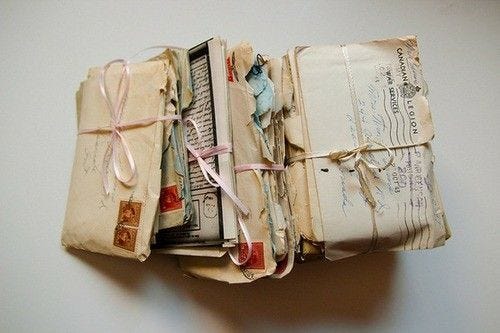
A letter comes through your door. Who could this be from? It has a piece of ribbon tied around it. You open it with excitement, noticing the attention, detail and care that has been put into making it.
Maybe it’s illustrated, painted or handmade by the sender. You read the note with more appreciation and excitement. It’s more heart-led. There is less urgency attached to it as the sender doesn’t know when it has arrived to you. There is no timestamp or read receipt.
The letter embodies this slowness we are missing.
It’s not just with creation but also in our consumption. We live such fast-paced lives that our attention is already fragmented, often taken away from us before we even realise it. It’s the familiar feeling of opening your phone to complete a specific task, then finding yourself scrolling on something totally irrelevant ten minutes later, forgetting what you were there for in the first place.
In this landscape, actively choose to make an effort with what you consume: choosing to sit down to watch a film, working for the reward, investing two hours in a storyline, not feeding yourself only instantly gratifying content or the same old series. Reading books, listening to entire podcasts, ultimately opting for commitment to something before it instantly clicks.
Without people choosing this, art will suffer and so will artists.
Not everything has to be immediately enjoyable. Sometimes you may watch or consume something you didn’t enjoy, but months down the line a part of it may resurface something in you, giving you just as much value as if you had enjoyed it. The power to sharpen your perspective and deepening your understanding of the world through interpretation. This richness can so easily be lost when we choose only immediacy.
All collective shifts come from individual action. Start with recognising where you outsource your own cognitive processes for convenience - rejecting your own subconscious by asking ai something you internally know. Ask yourself and allow it to arrive with space and time.
SLOW ART IRL
This part of the essay is a spotlight to artists of different mediums creative processes, specifically how slowness and space play a part in their creative practice.
I asked three artists the same three questions to investigate how space and slowness plays a part in the act of creating.
What to notice in the following interviews
Across three different disciplines ( design, film, and writing ) a consistent pattern appears in how meaningful work is actually made.
In design, slowness functions as a methodology: structured distance, physical-first tools, and deliberate stepping away in order to return with clarity.
For filmmaking and writing, it appears as emotional incubation: ideas are not executed immediately, but allowed to sit until they reach emotional readiness, shaped as much by life as by intention.
And in long-form writing, slowness becomes a system of meaning-making itself: ideas begin as fragments or irritations, and only through time do connections form, editing becomes discovery, and clarity emerges after accumulation rather than control.
What connects them is a shared resistance to immediacy, and a belief that the work improves through time spent not touching it.
1. Adrian Zanardo (he/him)- visual designer
Support his work here: https://adrianzanardo.com/project-greenland
1. Can you describe your creative process from idea to finished work?
My creative process is relatively structured, but the starting point and discovery of that initial idea is, and always has been something quite open and spontaneous. For example, within my own visual arts practice, it comes through my own sensory interactions with the world (then if something sticks, asking myself the question: does this manifest itself creatively), or through exploring and interrogating myself and the world around me.
Within my design practice, it’s a little more rigid as I’m more bound by commercial timelines and constraints, but at the same time I seek to channel a particular feeling, and connecting the brief I’ve received with the emotion/messaging identified or desired is what starts that process. From there, I undertake an ongoing process of research, brainstorming, and exploration. I’m a big proponent for working with my hands and pen-to-paper, even if developing ideas for digital outcomes. Those ideas are tested by the client, multiple times if needed, and with the clients audience depending on the project. It could almost be broken down into research & empathise > brainstorm and iterate > test and refine > prototype > build outcome(s).
2. What role does slowness, space or time play in creating your best work?
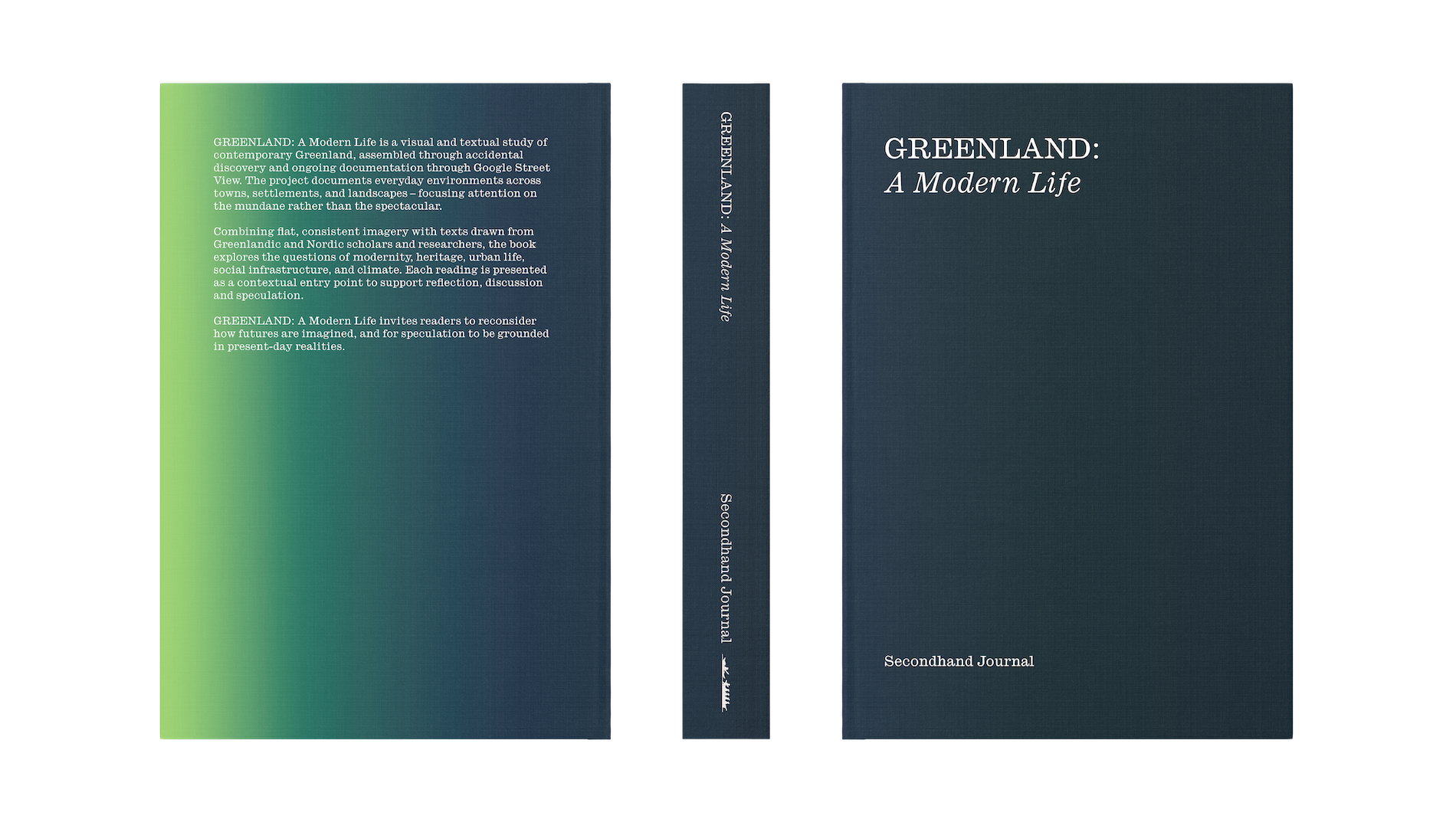
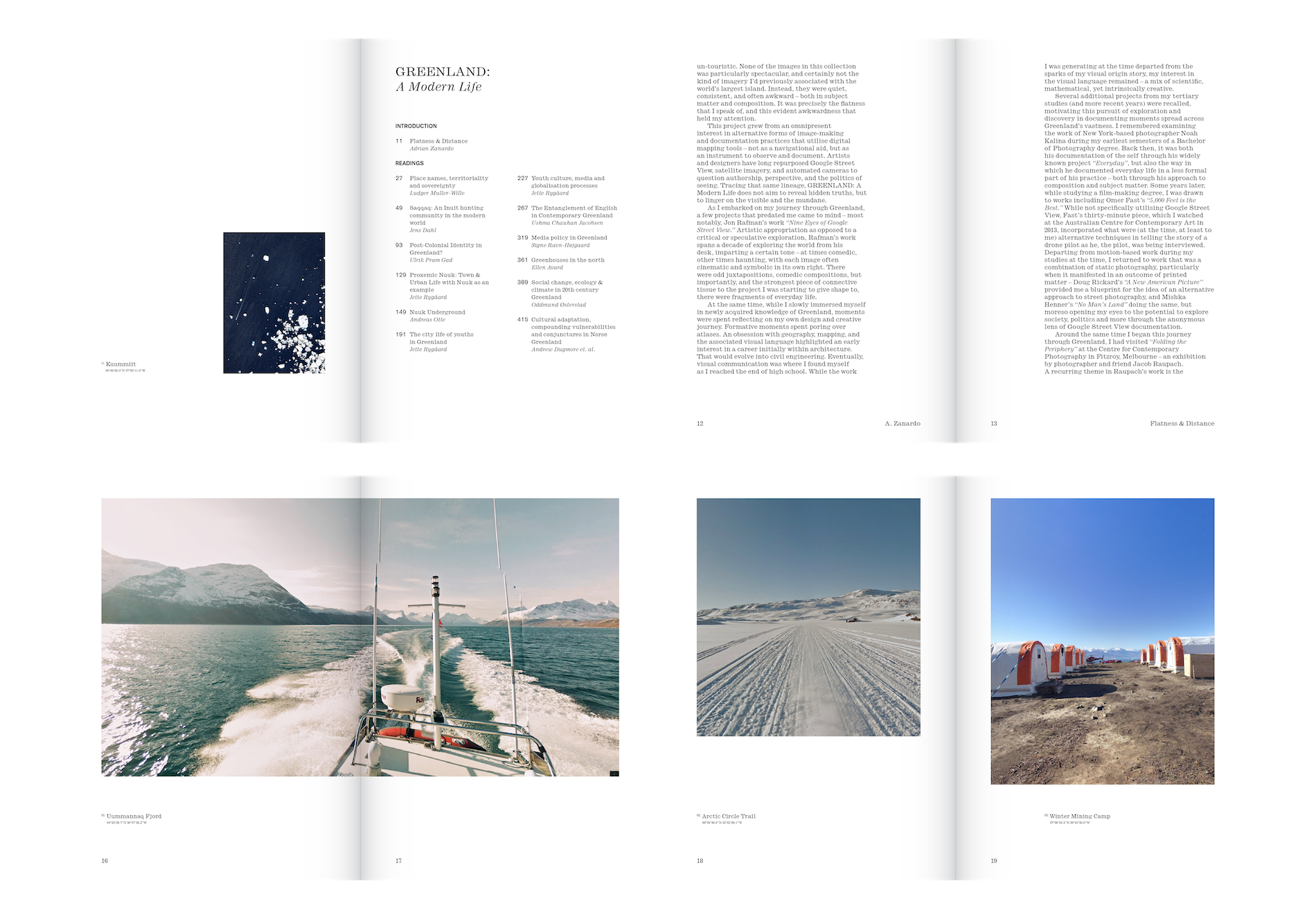
Slowness/space or time plays a big role, because I believe that good while good work CAN come from working fast, I still believe that our best work needs some room to breathe. Sometimes this can be at each step through the entire creative process, or at one point in particular. I also teach design at university, and I encourage my students to spend time away from their screens, and from engaging with their projects as a whole, not just to return to the work with renewed eyes, but a completely different frame of mind. It allows us to see what works, what is no longer saying what we thought it was, or address any problems that we previously didn’t know how to address. I’m also a big advocate for the slow burn project, even if they come from a moment of pure luck. One of my biggest projects began with a glitch on google maps and turned into a three-and-a-half year project that I guided myself through, sometimes not touching it at all for months at a time, purely because I knew that giving it that time to exist untouched would allow me to bring it towards its most clarified form at the end. This particular project is linked here: adrianzanardo.com/project-greenland
3. Have you ever deliberately left an imperfection in your work? Why?
I have deliberately left an imperfection - in photography work, it has been opting out of retouching to retain “realness”, even if producing work in an editorial and not documentary/journalism context, allowing imperfection to be at the fore of a brand identity because the eccentricities of it all spoke more authentically to the brand voice than something more polished and/or refined, and there have been illustration projects where I have kept (predominantly physiological) imperfections and quirks within the work because I haven’t been able to perfect them, have long chosen to opt against using AI to assist in the creative process of my visual works, instead choosing to define these as “stylistic decisions” and convincing the client to green light them. I think this is also driven by a simple desire to see more creative work that feels real.
maybe also worthwhile noting that to intentionally slow my creative process down i’ve opted in to particular tools: it all exists within physical notebooks first, with required information being made digital; and 18 months ago i made the decision to shift all my photography work film-based to ask me to slow down in the moment of creating work, but also in publishing work, at the mercy of my film-lab turnaround times
2. doll (she/her) - film-maker/writer

1. Can you describe your creative process from idea to finished work?
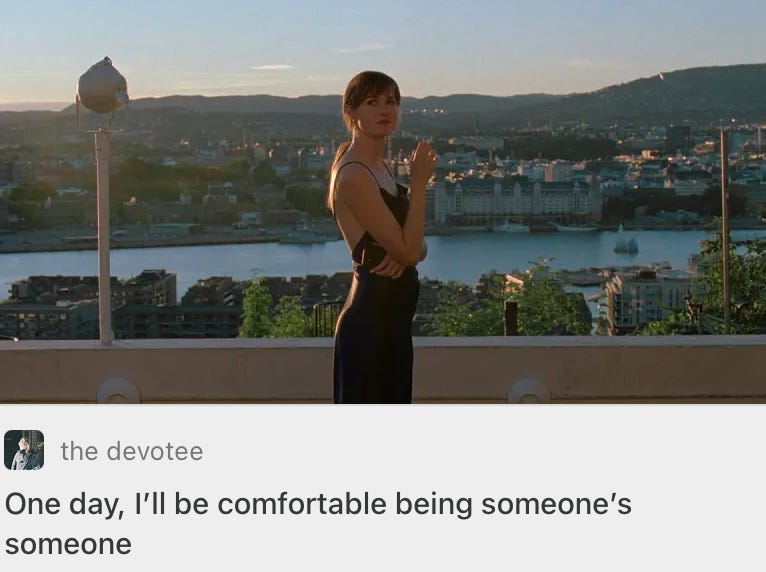
My creative process is super slow, as I’m someone who is intuitive and intentional with everything I do. Everything must come from the heart; otherwise, I wouldn’t be fully immersed in it and would affect the quality of the project. My idea for a project or Substack piece will sit in my notes app or journal until I feel emotionally charged enough to write about the topic. My most recent piece (One day, I’ll be comfortable being someone’s someone) would be the perfect example. I’ve been having those kinds of thoughts for months, typing a few lines in my notes app or journal; then I heard Olivia Rodrigo’s new song, and it inspired me to piece everything together. Writing a piece usually takes a few weeks to a month, a week if I’m really into it. For other mediums like screenwriting, writing a 70-90 page script takes months, sometimes even years. The fastest one I’ve written was around 2 months, but it was for a class, so it had to be quick.
2. What role does slowness, space or time play in creating your best work?
Slowness allows my ideas to become more polished and fleshed out. It’s like the process of fermentation, where the longer something sits, the better it tastes. I hate being rushed, and in social media, where ideas and trends move so quickly, I sometimes get pressured or frustrated for not posting more often. When this occurs, I always remind myself of my why I write, and I take breaks from Substack and social media. I would never publish or submit something half-baked. To be able to sit for days thinking, dreaming, and creating allows the smaller details to manifest. It’s not always about the big idea because the details, the small bites of information, stay with people longer.
3. Have you ever deliberately left an imperfection in your work? Why?
I’m a perfectionist, but there were many instances where I left flaws in my work. There were scenes I wanted to scratch that actually made the story feel more whole, or paragraphs I thought were too cringy but made the article feel more raw and human. What I love about writing and creating is that there is no formula, no right way to do it. It only has to make sense to you.
3. Mariam (she/her) - writer

1. Can you describe your creative process from idea to finished work?
My ideas rarely arrive as finished arguments. They usually begin as a small irritation, contradiction, or observation that I can’t stop thinking about. For example, I might notice that yellow streetlights have disappeared, that Miyazaki depicts corruption as a physical substance, or that people use the language of authenticity while performing constantly online. I collect these observations in my notes and let them sit for a while. The writing begins when I realise there’s a larger question underneath the observation. The streetlight essay wasn’t really about streetlights; it became a piece about memory, imagination, and what happens when efficiency replaces atmosphere. Once I’ve found that deeper question, I start researching widely across literature, film, religion, history, psychology, and cultural criticism. My first drafts tend to be exploratory rather than structured. I’m trying to discover what I think. The editing process is where the piece becomes itself. I cut aggressively, look for recurring images and ideas, and try to make sure every section is pulling toward the same central question. The finished essay is usually much simpler and clearer than the version I began with.
2. What role does slowness, space or time play in creating your best work?
Time is probably the most important ingredient in my work. Many of my essays depend on noticing connections between things that don’t seem related at first. That kind of thinking can’t really be rushed. Often an idea will sit in my notes for weeks before I understand why it matters. I’ve learned that forcing an essay too early usually produces something competent but forgettable. The stronger pieces arrive when I’ve had enough time to live alongside the question. During that period I’m reading, teaching, walking, scrolling, watching films, talking to people, and collecting fragments without necessarily knowing how they’ll fit together. Slowness also helps me move beyond opinion. My goal isn’t usually to tell readers what I think. It’s to understand why something exists, what need it serves, and what it reveals about the culture that produced it.
3. Have you ever deliberately left an imperfection in your work? Why?
Yes. Strange sentences, phrases that feel more textured than literal. I think readers respond to signs of humanity more than signs of perfection. Sometimes that means leaving a slightly unusual phrasing because it sounds more like my real voice. Sometimes it means keeping a personal anecdote that feels vulnerable rather than replacing it with a cleaner argument. Occasionally it means allowing a piece to end with a question rather than a definitive conclusion. I’m interested in essays as conversations rather than declarations. A perfectly polished piece can sometimes feel closed off. Small imperfections can create room for readers to enter the work themselves. More broadly, many of the themes I return to—memory, faith, nostalgia, grief, identity—are inherently unfinished. It would feel dishonest to write about them as if they can be fully resolved. Sometimes the imperfection is part of the truth.
Taken together, these interviews make something clear: slowness is what allows meaning to form. And when it is removed, what we get instead is output without digestion, work that is technically complete but emotionally unfinished.
In my own creative life, I find a huge difference between the process of my self-published Substack with self-imposed deadlines and lots of space to explore or put ideas on the backburner, collecting lists and fragments under the “To write” section of my notes app—and working ‘creatively’ for others with strict turnover rates and a commodification of creation. There’s a big difference between producing and creating.
I’m not a fan of how often the word “productive” creeps into language, whether it’s people I talk to about their day saying, “I’ve not been very productive today” or “I’ve had a lazy day,” as if every day should be measured by individual output. Some days, just staying connected to yourself is productive enough.
If you create (which is a human instinct everyone possesses), you need space to do nothing or be slow. The perpetual speed of life is seeping into our nervous systems, creating internal urgency, and the effect is that we are losing good art, beauty, and sensuality.
Every time you feel guilty about what you should be doing, remember this is conditioned from the external world, and there is nothing for you to do but exist and try your best.
Marcus Aurelius says every man’s nature is to do the things that make him a man, just as a bee pollinates honey and a bird flies. But there isn’t a list of millions of other things bees should be doing or birds should be trying. This pressure is created and manufactured.
Instead of measuring your productivity, measure your creativity.
The process of creativity is slow and considered. It involves connection to the self, and this means not forcing yourself to produce when you don’t have the energy or when you know your thinking isn’t clear.
It’s creative to allow space, fill your time with aligned things that make you feel good, and trust the idea will develop in time.
I actually think the amount of slop and the speed at which a perfectly refined draft of something can now be produced gives you even more permission to surrender to slowness and creation without urgency, because this is the kind of work that is deeply needed and that people crave more than ever.
Taking your time is the ultimate artistic act.
Thanks so much for reading and huge thanks to Adrian, Doll and Mariam for the interviews! I thoroughly enjoyed researching and writing this week for a topic I’m so passionate about.
I would love to continue the conversation on this topic in the comments, any further insights, perspectives or examples in your life experience where this shows up.
& If you enjoyed, I post weekly on culture, creativity and self-inquiry.
Love Nina xxx
We now know so much from the neuroscience in terms of our brains having the capacity for creativity only when in the wandering mode. And for that, we need leisure time. Thus creativity is always a question of politics and injustice. Love your post.
thanks for including me in this! it was great to get the perspectives from the others - and it's especially comforting to know that i'm not alone in filling my notes app with fragments of thoughts until stars align to bring ideas together.
i particularly love the notion of the process being about fermentation, it paints a beautiful picture of engaging and growing into creativity as time passes - things become more complex, intentional and rewarding with patience..which can be a struggle alongside the time constraints that get placed on creatives..