

The conditions for creative energy🫧
A life of your own: poetry watching, space, and a practice of creativity

For those who doubt their own creativity, who feel something holding them back from acting on their ideas. A reframing of creativity before action is taken. Exploring the conditions for coming back into contact with what is already there.
Creative energy lives within each and every single being.
To define yourself as creative is simply a matter of whether you tap into this energy or let it pass unnoticed.
Creativity is the visceral activation felt in the body. The subtle shift in your stomach, chills on your arms when something lands deeper than expected, your mind lingering on a phrase, moments where your attention catches, something in you recognises meaning before you can articulate it.
It lives in this attention to detail. Unless you pay attention, your creativity remains half-formed. It takes practice to let this attention become something.
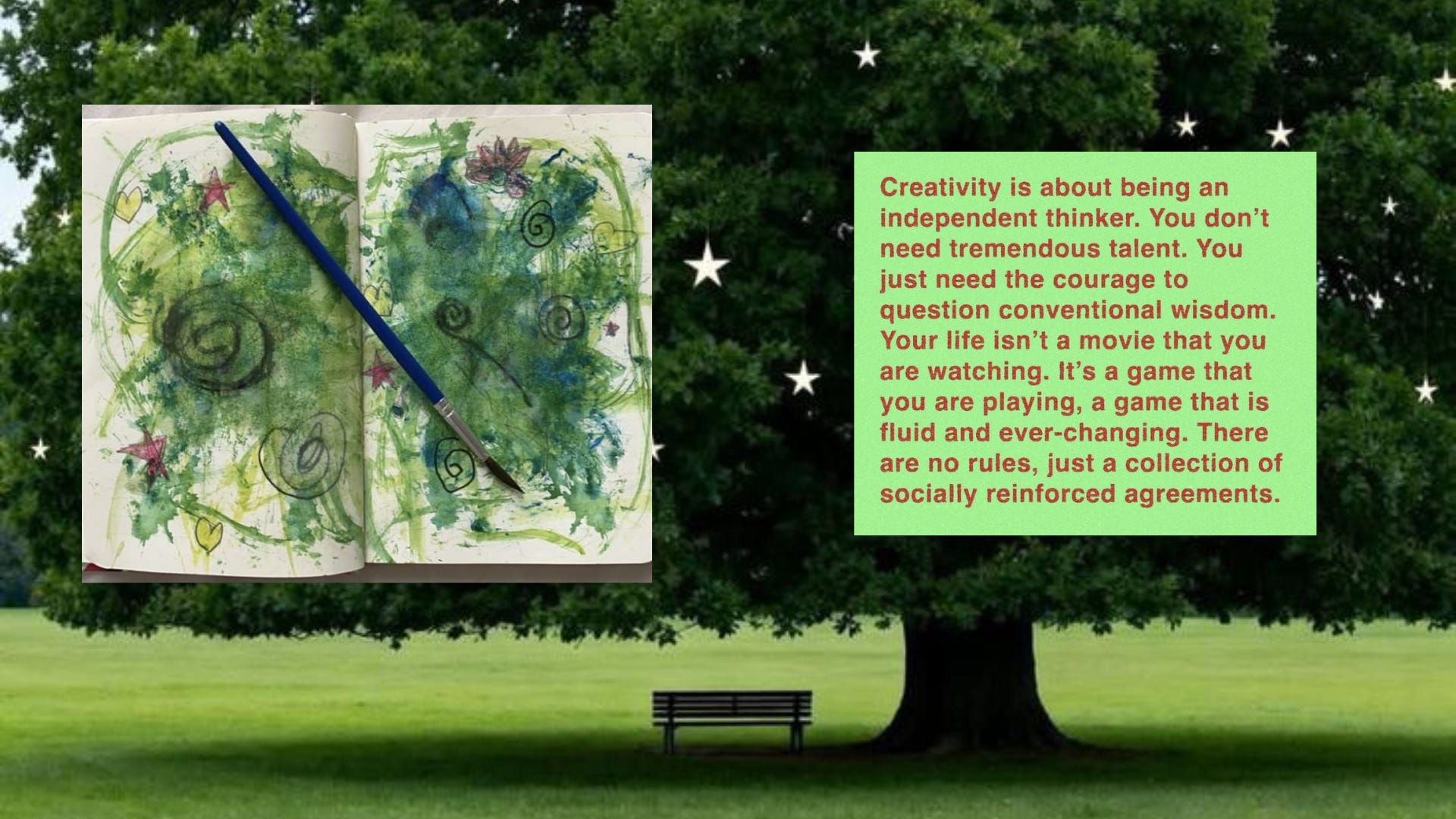
There’s a misconception creative means artistic, and if it’s artistic then it’s exclusive to a select few who are ‘gifted’. This assumption stops so many people from engaging with their own creative energy as creativity is saved for the real ‘artists’.
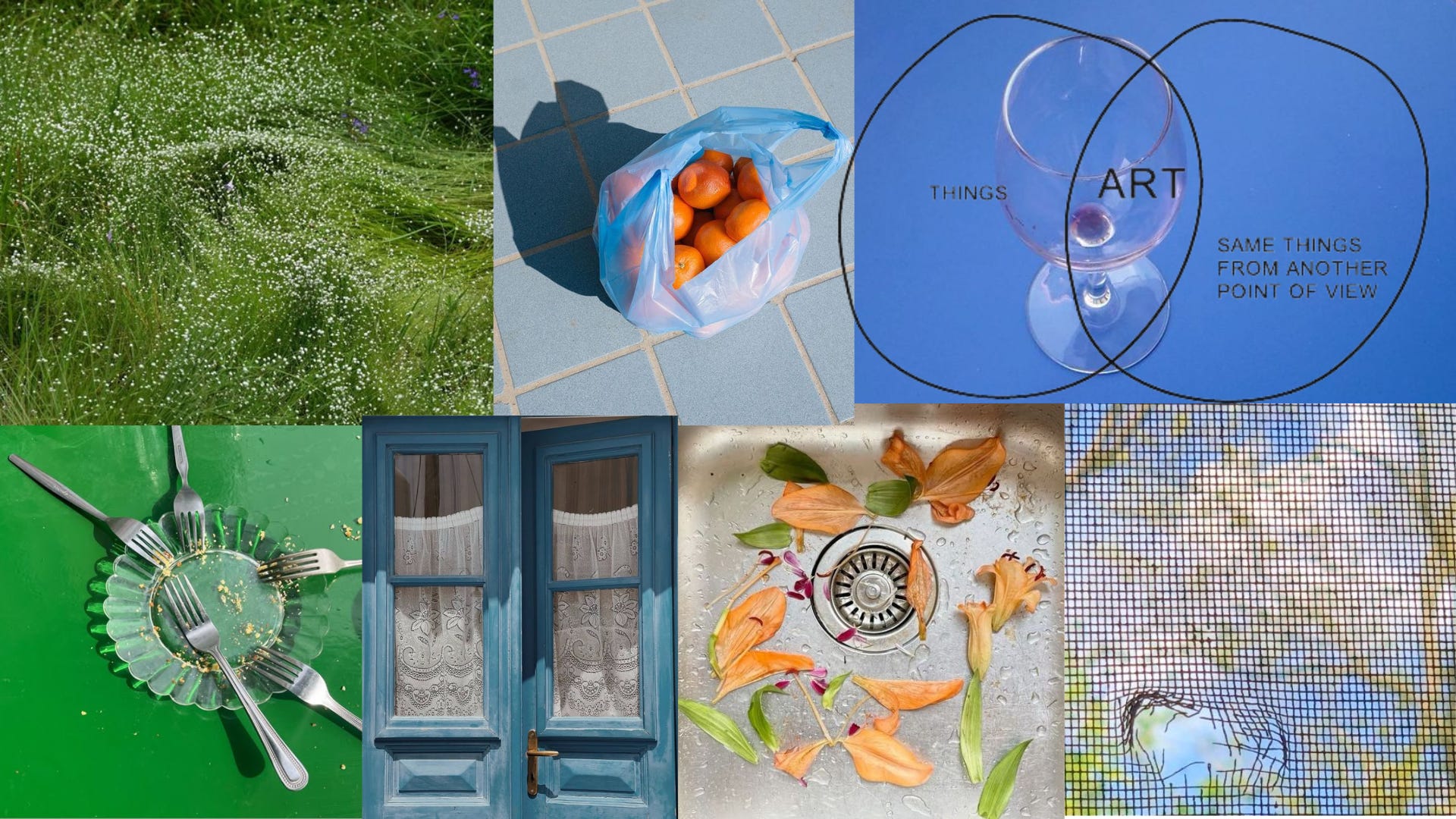
Finding the poetry in it
I came across the idea of poetry watching from Anna Howard, described as people watching with the express intent of finding the poetry in it. The world is already filled with moments worth noticing. Art is not separate from daily life but something embedded within the mundane, waiting to be recognised.
When you begin to move through the world with this kind of attention, the experience of being in it shifts in a way that is difficult to reverse.
Because you are no longer simply passing through spaces but becoming attuned to them, noticing fragments of conversation, gestures, small interactions that would otherwise dissolve, and in doing so the world begins to feel more textured, more alive, as though it is offering you creative material constantly.
When you give your attention to life’s art, camouflaged in the mundane, when you lead with curiosity, you become an artist.
Your perception becomes generative, the way you see begins to shape what is available to you, and when you allow yourself to take these moments seriously, they begin to accumulate into something that feels like your own way of understanding the world. From there, expression becomes less of a decision and more of a continuation, giving form to something that has already been building, and the outlet itself becomes secondary, whether it is writing or something else entirely, because what matters is not the medium but the willingness to follow the thread of what has caught your attention.
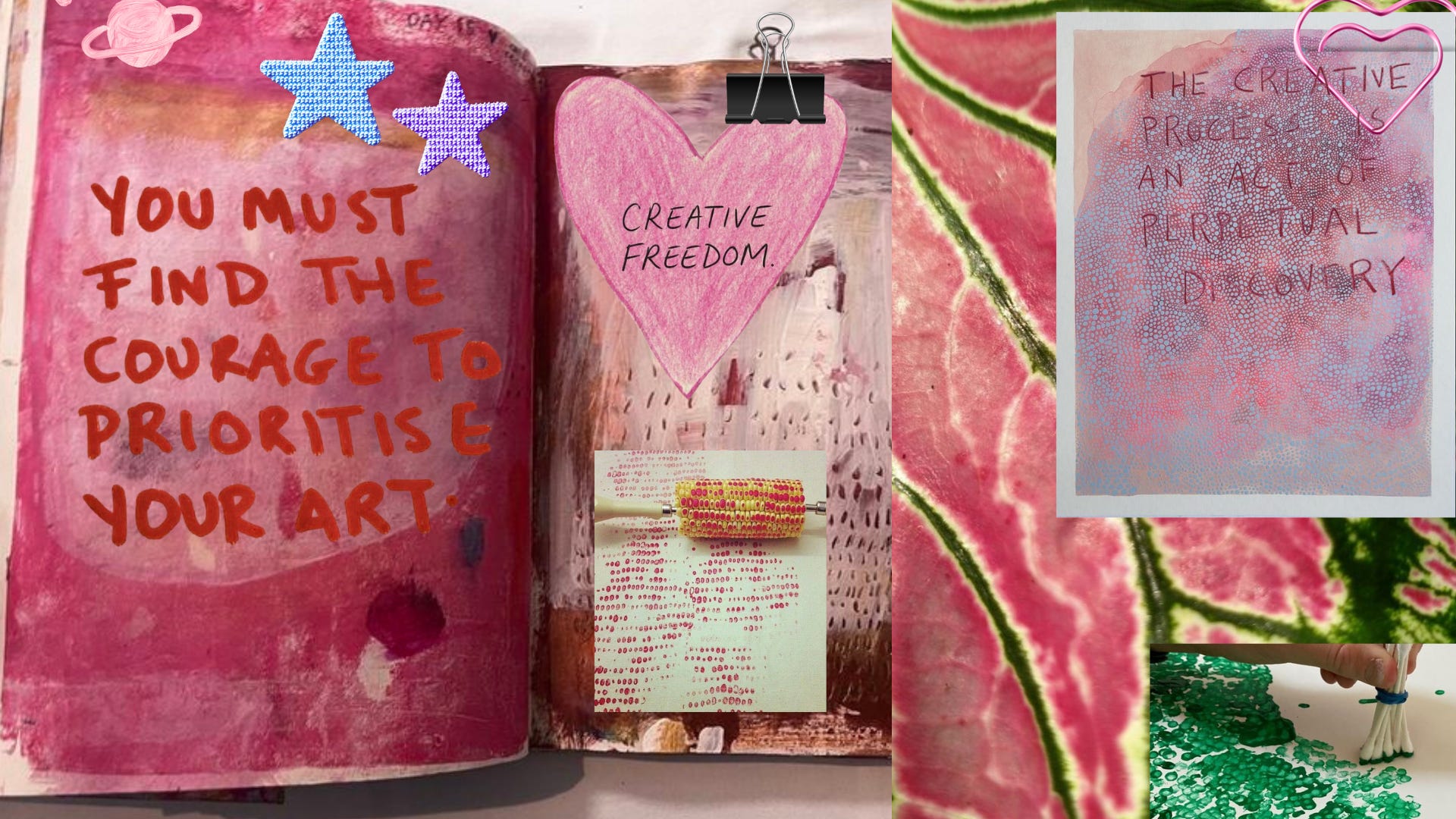
Enjoy the process
Real creation is never packaged with expectation for an outcome, it exists in the process. Play is a paramount factor of creativity. To play is to experiment and only through experimentation can you be an artist.
On space
To respect your creativity, you have to give it space, in a way that most people resist. If your mind is constantly distracted by to-do lists, songs to listen to, words to read or people to talk to, there is less space for something more original to surface.
When you begin to protect even small pockets of space, particularly in moments where your mind is naturally softer and less defined, you start to notice that ideas arrive differently, less forced, more fully formed, as though they have been waiting for the conditions to emerge.
Creative devotion practice…
• A discipline of space: within your day, not in a rigid or forced way, but something you return to consistently enough that your mind begins to trust it will be given room to unfold
• A solitary morning: can produce enough creative energy to carry you through the whole day, waking slowly without an alarm so you remain closer to whatever has been moving beneath the surface overnight rather than being pulled straight into urgency. The moment you begin speaking or engaging outwardly your energy shifts before you have tuned into it yourself.

• Morning pages: three pages of stream-of-consciousness, getting everything out that is sitting on the forefront of your mind so that the layers beneath can be paid attention to, even though it’s tempting to stop after one page, pushing to three makes a difference because you think you are done but actually you are not
• Protect your energy: as much as you can ensure the interactions you have nourish your spirit, if you are left feeling constantly drained it is hard to attune to the creation inside you. You cannot control others, but you can control their access to you.
• Not going on your phone after waking up or while creating: keep it on airplane mode until you are outside, because the moment your Face ID unlocks your home screen you are bombarded with informational stimulation, your mind speeds up and begins running on loops, and whatever was forming internally gets overridden.

• Writing things down throughout the day, or more generally documenting: whatever ignites your creative energy, whether that is a thought, a phrase, something you have seen, a conversation you want to remember, a photo you take, something you draw, film, or quickly note in a tiny notebook, because it is not really about what the thing is, it is about the practice of getting it out of your mind and into some form, giving your brain the signal to acknowledge it, and so many ideas later return from moments that felt random at the time.
• Letting things marinate after you have taken action: which is different from giving yourself space beforehand. This is leaving something alone and coming back to it with fresh eyes, like sleeping on a decision but applied to creation, because when you rush to finish something it often comes out as an underdeveloped first version that later you realise could have gone deeper.
• Allowing yourself not to share everything immediately, even though there is an urge to move quickly or to learn by doing publicly, because sometimes patience lets an idea reach a point you actually love more, rather than releasing it just to be done with it.
• Not identifying too strongly with your work or with being “creative”: While you can take pride in your work, it can hold you back if you become too attached. The moment it becomes part of your identity you take things personally, your ego interrupts something that is otherwise much more natural and fluid.
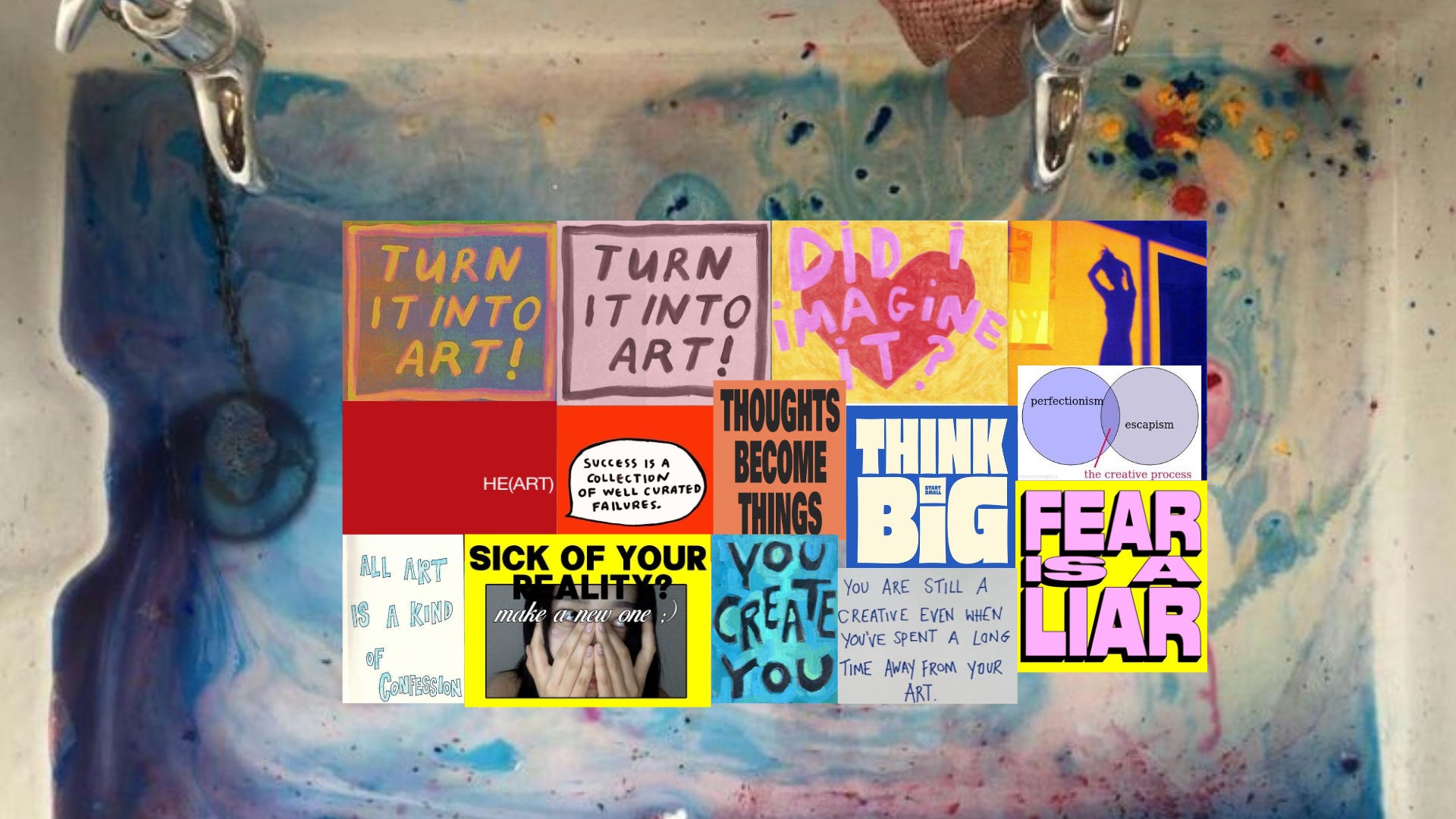
Creativity is not something you have to search for, it is something you practise through the way you pay attention. Creativity is like a muscle, the more you use it the stronger it becomes.
Thank you so much for reading! If you enjoyed this, I publish on creativity, culture and anthropology weekly. I’d love to hear any further insights on creativity and any creative practices that work for you…
Related works…
Things that count as work if you're creative

Reconnecting with your creativity, art as shadow work, space and self-expression.
Cultivate, then recalibrate.

How to return to your path every time you drift- your desire as a compass.
The life you postpone while waiting to feel ready

Visibility is a precondition for most forms of freedom.

This was the perfect monday morning read!
Oh my god lately I've been thinking a lot about our own creative practices and how they are even more important and joyful than the end result itself. The ideas around being creative = being an independent thinker, about incorporating play and about giving yourself some space since the creative process is a slow and deliberate one really resonates with me 💌 Plus the mention of Wild Geese and poetry watching and the fact that art lies within the perception of the ordinary. Ahh a wonderful essay 🌸