
The hidden politics of food systems
Culture decoded: how dynamic pricing, convenience, and everyday habits are reshaping food systems and access

Politics is often associated with formal institutions, public authority, or only visible in moments of conflict. Yet much of social life is shaped through practices that don’t appear political at all. Food is one of them. Because eating is necessary and morally charged, food systems become an effective way for power to be normalised.
Commodity systems, consumption, and domestic food labour all come together to conceal political relations in everyday life. Food sits at the intersection of labour and consumption, and asks questions of morality, obligation, and who is included or left out.
In this hidden power beneath food systems, exploitation doesn’t always feel like exploitation. It can feel like habit, comfort or even choice. Inequality gets reframed as personal responsibility, and collective problems become individual ones. In the process, power becomes harder to recognise, taking forms that feel normal, moral, even empowering.
Food system politics is no longer static, it has become responsive.
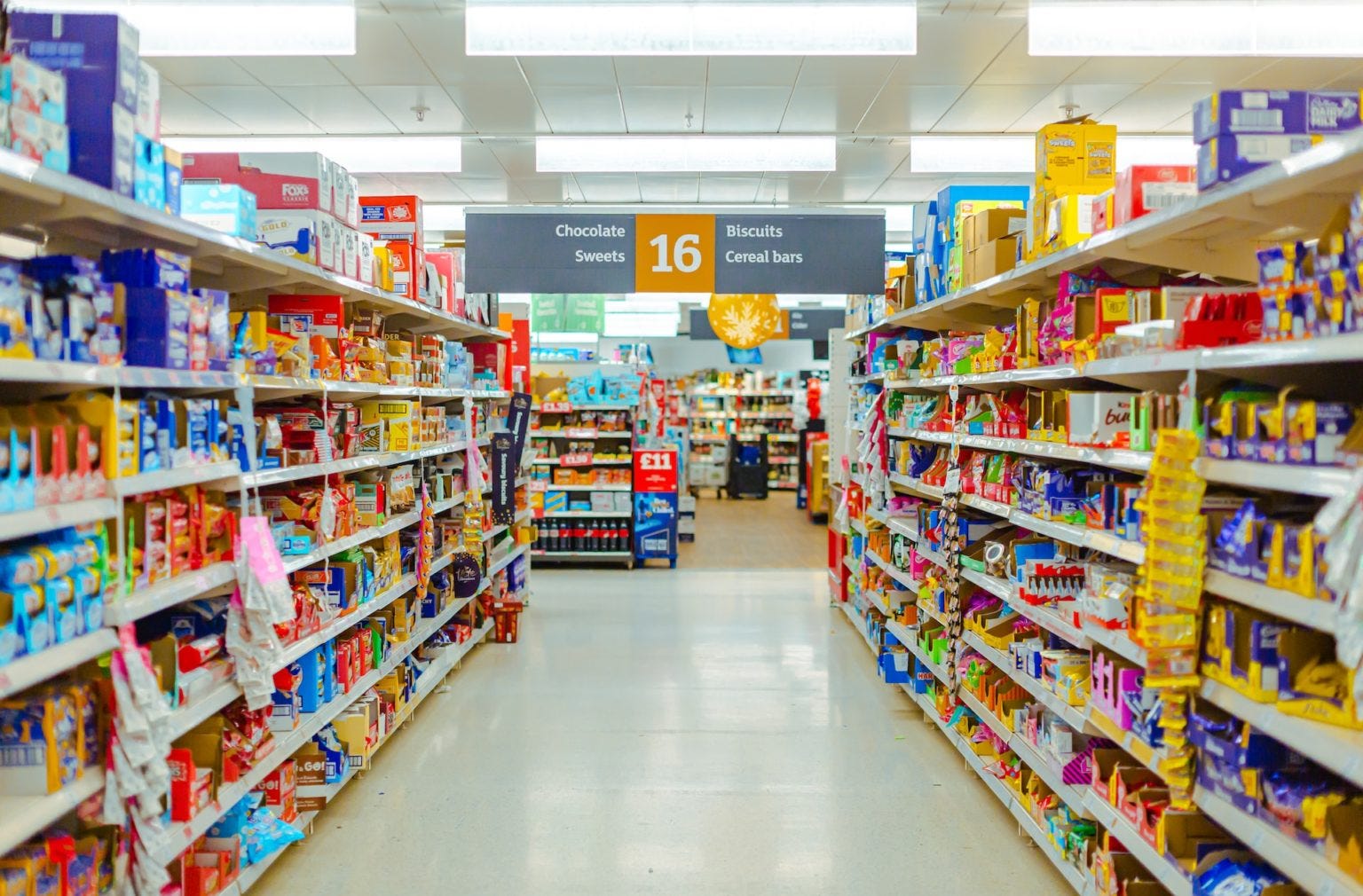
Get rid of the “super” in super-market
I wrote a piece on the morality of food back when I was studying the anthropology of food last year, but after seeing this recent news story I found myself back in a rabbit hole of disillusionment with the food system.
The spiral started from seeing the Bank of England warning uk shoppers to brace for dynamic price tags (you can also watch this instagram post to see it in practice).
What is happening here is that food labels in supermarkets are turning electronic and therefore dynamic, meaning supermarkets can change prices according to peak times, like Uber or airlines do, the difference is that this isn’t about taxis or flights anymore, it’s about everyday food. While it may seem like another inevitable process of digitisation, it points to a more extreme form of surveillance capitalism, where even access to food is becoming responsive, and increasingly unfair, making a trip to the supermarket feel like getting scammed.
The food system behind supermarkets has already shifted as convenience has been prioritised over seasonal, local food but this shows it has gone a step further, the system is no longer supplying food, it’s actively shaping how and when people can afford to access it.


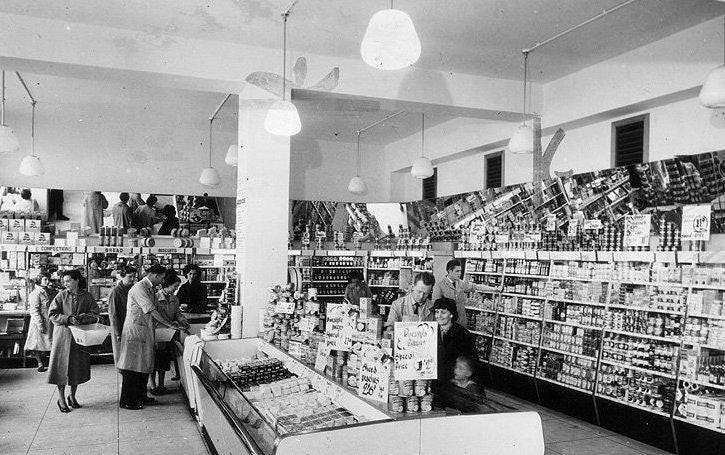
It feels crazy how disconnected ‘actual’ food has become from the system we are now used to. The first supermarket in the Uk didn’t come until 1948. Before this you would go to a greengrocer for vegetables, a butcher for meat, a bakery for bread, everything was more localised and situated closer to its source, and while this asked for more time, the product itself wasn’t as abstracted from where it came from, the local economy was stronger rather than stretched across a global one, where you might be buying strawberries from Argentina instead of Scotland. It feels connected to how time itself became commodified under systems of productivity, where being able to get everything in one place, instantly, became the ideal, in the same way marketplaces like Amazon operate, but the costs of this convenience are becoming harder to ignore.
There is a growing need to reframe how we relate to food and food systems, to step away, where possible, from these highly commercialised structures and towards more grounded alternatives like growing food or community market gardens. But even this isn’t straightforward. It isn’t accessible to everyone. Eating locally, seasonally, or ‘organic’ often sits alongside having the time, money, and mental space to think about where food comes from, which means it moves alongside class.
Sweetness and pleasure
The politics of food systems is often hidden because it is embedded in practices that feel pleasurable and habitual. Everyday eating rarely appears political precisely because it is repetitive and folded into the rhythms of the mundane.
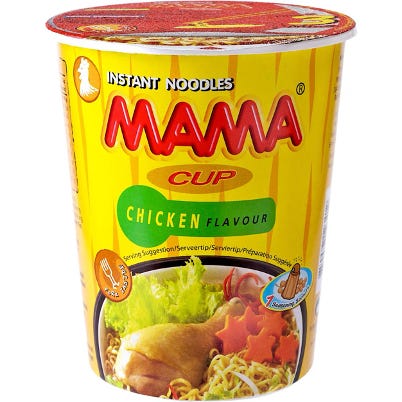
Ethnographic research in Papua New Guinea shows how people eat imported mama instant noodles daily because they’re cheap and easy. Over time, that convenience reshapes what eating looks like. Meals become more individual and less tied to local food systems. This example shows how the convenience of global food commodities can normalise dependency on unequal systems, where relations of labour and trade are absorbed into everyday routines rather than recognised as political conditions.
A similar process can be seen in the history of sugar. What was once a luxury became an everyday staple, embedded into daily life as a cheap and efficient source of energy pushed onto the working class. Consumed through tea breaks and meals, it supported higher productivity at work. Exploitation was metabolised as sweetness transformed labour into routine reward. Power in this example wasn’t imposed from above, but incorporated into the body itself, reproduced through desire rather than force.

Moral identity and technological convenience.
Dietary practices such as veganism or locavorism are framed as expressions of ethical selfhood through which individuals signal status and belonging, where food becomes a site of moral distinction.
The expansion of platform-based food delivery through services such as Uber eats and Deliveroo reshapes relationships to access and consumption by promising instant availability and mass global variety. This intensifies the abstraction of food from its conditions of production even as it broadens the terrain of ethical and aesthetic choice. Political relations are relocated into individualised moral identities and technological advancements.
Food becomes something you can have at any time, in any form, with minimal effort. This convenience comes with a trade-off. The conditions of production move further away from you. You don’t see where things come from, who made them, or what it took to get them there. It all arrives fully formed, ready to consume.

Where responsibility sits
By the end of reading this you may feel a bit stressed. Yes, it’s important to be educated on how food is leveraged against the everyday person as a political tool, but it can also make you feel a bit helpless. You can decide to be more intentional about where you shop, learn more about growing food, or find food-sharing collectives in your community, but you can’t take on the whole of the food system’s issues as your responsibility.
An anthropologist, Nikolas Rose, argues that responsibility operates as a political technology where individuals are addressed as active subjects expected to regulate their own conduct in line with broader political objectives. From this perspective, ethical food practices can feel like personal values, but they appear as techniques of self-governance sitting within existing economic arrangements rather than really challenging them.
At the same time, ethical food choices function as markers of distinction. Bourdieu famously demonstrated that taste is never neutral. The ability to consume organic, local, or ethically certified food depends on access to cultural capital, positioning ethical eating as a deeply classed practice rather than a universally available option. Ethical eating risks becoming a sign of moral and social superiority, reinforcing hierarchies even as it claims to challenge them. This becomes a politics of virtue rather than redistribution. In this system, inequality is managed through moral differentiation rather than confronted as a structural condition.
These perspectives suggest ethical food practices are not as empowering as they seem. By translating collective problems into individual responsibility, they narrow the horizon of political change, making inequality a matter of better choices rather than a structural issue.
Some useful links if you want to learn more about food systems
Manchester based:
Would love to continue the conversation on this topic in the comments, any further insights, perspectives or examples in your life where this shows up.
Thanks a lot for reading! If you enjoyed, I post weekly on culture, creativity and self-inquiry. Reach me at ninavincentx@outlook.com or @n1naaxoxo on instagram.
Im assuming you read George Monbiot - growing your own food isn’t sustainable. There purely isn’t enough land on the planet. It’s an idealised unachievable idea. Precision fermentation seems to be the only practical way forward.